October’s Seasonal Spotlight: Apples
There are certain foods that just feel like fall.
Pumpkins begin appearing on front porches. Cinnamon finds its way into just about everything. And suddenly, the produce section is filled with apples in shades of red, green, yellow, and pink.
Even here in Arizona, where October doesn't always feel quite like the fall pictured on a greeting card, apples have a way of making the season feel like it has officially arrived.
And with so many varieties available, there really is an apple for almost everything.
Some are crisp and sweet enough to eat straight from the refrigerator. Others are tart and sturdy enough to hold their shape in a pie. Some soften beautifully when cooked, making them perfect for applesauce or apple butter.
But beyond their versatility, apples also provide fiber, vitamin C, and a variety of naturally occurring plant compounds, and some of their most valuable nutrition is found in the part we sometimes throw away: the skin.
Why Apples Are So Nutritious
We have all heard the saying, “An apple a day keeps the doctor away.”
While an apple certainly is not a magic solution for good health, there is good reason this familiar fruit has earned such a wholesome reputation.
A medium apple provides approximately:
95 calories
25 grams of carbohydrates
19 grams of naturally occurring sugar
~3 grams of fiber
Vitamin C
Naturally occurring phytochemicals, including quercetin, catechin, chlorogenic acid, and anthocyanins in some varieties
Apples contain both soluble and insoluble fiber.
One particularly interesting type is pectin, a soluble fiber found in apples. Pectin can be fermented by bacteria in the colon, making apples one of many whole foods that can help provide nourishment for our gut microbiome. Insoluble fiber, meanwhile, helps support normal movement through the digestive tract.
And before you reach for the peeler, there's something worth knowing.
Don't Toss the Skin
A significant amount of an apple's nutritional value is concentrated in or near its skin.
Apple peel contains fiber as well as numerous phytochemicals. Removing the skin reduces the amount of fiber you're eating and removes the majority of the apple's flavonoids.
So whenever possible, I recommend enjoying the whole apple rather than peeling it.
Of course, give it a good wash first.
It's a simple example of something I talk about often: when we eat foods closer to the way they were provided to us, we often receive more of what that food has to offer.
Not All Apples Are the Same
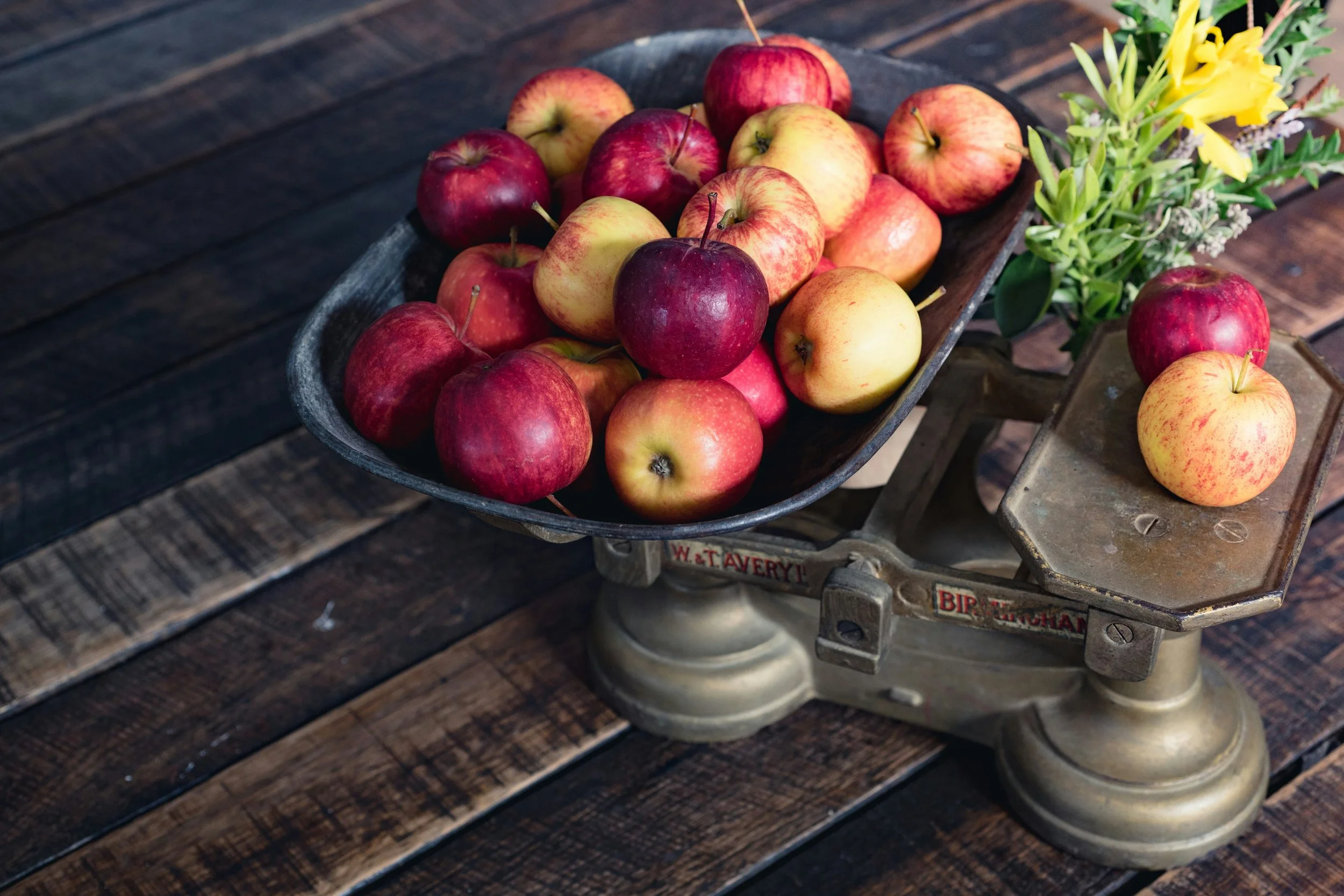
One of my favorite things about apples is just how many varieties there are.
And if you've ever made a pie with an apple that turned to mush or bitten into a beautiful apple only to discover it was much softer than you expected, you already know that they're not interchangeable.
Different varieties vary in sweetness, tartness, firmness, and how well they hold their shape during cooking. University Extension guidance reflects those differences, with some varieties better suited to baking and others particularly useful for sauces, cider, drying, or eating fresh.
Here are a few you'll commonly find:
Honeycrisp: Crisp, juicy, and balanced between sweet and tart. Delicious eaten fresh, but sturdy enough for baking, too.
Granny Smith: Firm and distinctly tart. Their firmness helps them hold their shape when heated, making them a classic choice for pies and other baked dishes.
Fuji: Very crisp and naturally sweet. A great snacking apple and also useful for applesauce, cider, or drying.
Gala: Sweet, mild, and crisp. Wonderful eaten fresh and also well suited to applesauce, cider, or dehydrating.
Golden Delicious: Sweeter and softer than Granny Smith, but versatile enough for fresh eating, baking, sauce, and cider.
Pink Lady: Crisp with a sweet-tart flavor. They're excellent eaten fresh but also hold up well in pies and baked dishes.
McIntosh: Softer and juicier than many other varieties. They break down more easily when cooked, which makes them particularly useful for applesauce and apple butter.
And you don't have to use only one variety.
When making something like an apple crisp or pie, combining a sweeter apple with a tart variety can create more complexity in both flavor and texture.
What About the Sugar?
Apples are naturally sweet, with a medium apple providing around 19 grams of naturally occurring sugar. But just as we discussed with melons last month, I don't think it makes sense to look at that number in isolation.
A whole apple isn't simply sugar.
It comes packaged with water, fiber, vitamins, and phytonutrients. The fiber in whole fruit helps slow digestion, which is one reason eating a whole apple is very different nutritionally from drinking apple juice, where much of that fiber has been removed.
Still, we can be thoughtful about how we eat fruit.
Instead of an apple being the entire snack, try pairing it with a source of protein and healthy fat to create something more balanced and satisfying.
A few of my favorites:
Apple slices with almond or peanut butter
Apple with a handful of walnuts or pecans
Sliced apple with cheddar cheese
Apple added to plain Greek yogurt with cinnamon and walnuts
Apple alongside eggs or another protein at breakfast
The goal isn't to fear the natural sugar found in fruit.
It's to look at the meal or snack as a whole and ask, “How can I make this more nourishing?”
A Fall Favorite Worth Enjoying
Apples are one of those foods that can be easy to overlook because they are available almost everywhere, almost all year long.
But there is something different about enjoying a crisp apple in the fall, when so many varieties are at their peak and the season naturally invites us back toward warmer flavors and comforting foods.
So, as the temperatures finally begin to cool and fall starts making its way to Arizona, take advantage of apple season.
Pick up a variety you haven't tried before. Pay attention to the differences in flavor and texture. Try one that's better suited for baking and another that's best eaten crisp and cold.
Good nutrition really can be as simple as enjoying what's in season.
Resources
Harvard T.H. Chan School of Public Health – Apples
Harvard T.H. Chan School of Public Health – Fiber
U.S. Department of Agriculture – FoodData Central: Apples, Raw, With Skin
University of Illinois Extension – Apples: Apple Varieties and Best Uses
University of Illinois Extension – Which Apple Works Best for Preserving?