By November, pumpkins are everywhere.
They're sitting on front porches, tucked into fall décor, baked into pies, blended into coffee drinks, and incorporated into just about anything that can be labeled “pumpkin spice.”
But somewhere along the way, I think we may have forgotten that pumpkin is actually food.
And a pretty nutritious one at that.
Pumpkin is one of those wonderfully versatile foods that can move between sweet and savory dishes—and it provides an impressive amount of nutrition along the way.
So before those pumpkins disappear with the fall decorations, let's take a closer look at what they have to offer.
Why Pumpkin Is So Nutritious
That beautiful orange color gives us our first clue.
Pumpkin is particularly rich in carotenoids, including beta-carotene, the plant pigment responsible for much of its vibrant orange color.
Our bodies can convert beta-carotene into vitamin A, an essential nutrient involved in normal vision, immune function, cellular growth, and the maintenance of healthy tissues.
Pumpkin also provides:
Fiber
Potassium
Vitamin C
Vitamin E
Folate
Other carotenoids and naturally occurring plant compounds
And because pumpkin contains a significant amount of water, it's relatively low in calories while still providing valuable nutrients and fiber.
This is one of the things I love about whole foods.
The orange color isn't simply there to make pumpkin look pretty. The compounds responsible for that color are part of what gives the food its nutritional value.
Don't Forget About the Fiber
Pumpkin is also a source of dietary fiber, which plays an important role in digestive health.
Fiber helps support normal bowel function, contributes to feelings of fullness, and provides substrate that can be utilized by microorganisms within the gut.
And unlike many of the highly processed “pumpkin-flavored” foods that fill the grocery store this time of year, actual pumpkin provides those nutrients as part of the whole food.
A pumpkin muffin or flavored coffee may taste like fall, but that doesn't necessarily mean you're getting much pumpkin.
If you're looking for its nutritional benefits, the pumpkin itself is what matters.
Pumpkins Aren't Always Orange
When you picture a pumpkin, you probably imagine the classic round, bright orange pumpkin we carve every October.
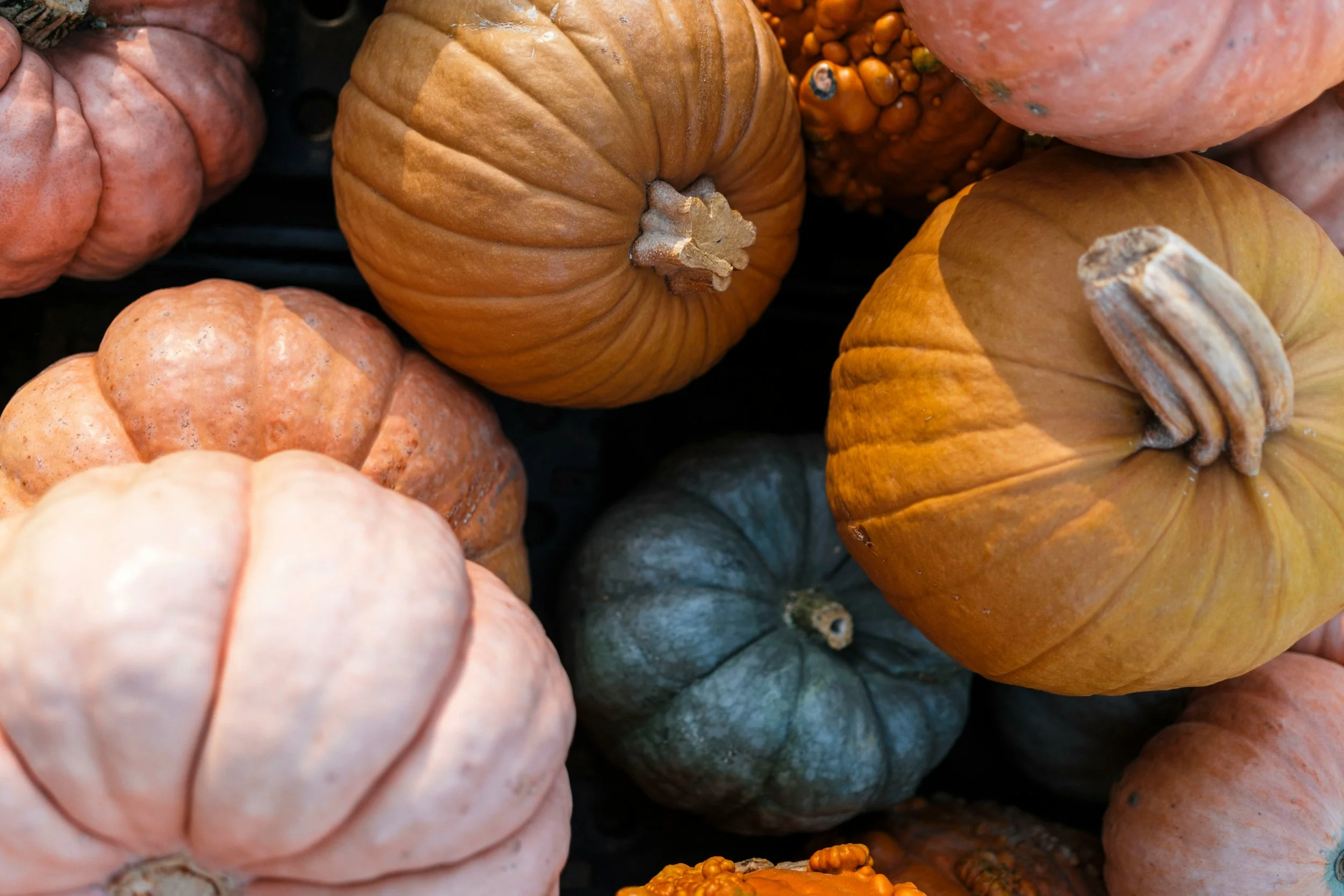
But take a walk through a farmers market or grocery store this time of year and you'll quickly realize pumpkins come in an incredible variety of colors, shapes, and sizes.
There are creamy white pumpkins, deep green and striped varieties, reddish-orange pumpkins, tiny miniature pumpkins, and even varieties with bumpy or unusually textured skin.
Some varieties you may come across include:
Sugar or Pie Pumpkins: Smaller than the traditional carving pumpkin, with sweeter, denser flesh that makes them particularly well suited for cooking and baking.
Cinderella Pumpkins: Deep reddish-orange, flattened, and beautifully ribbed. Their appearance is said to resemble the pumpkin depicted as Cinderella's carriage, hence the name.
White Pumpkins: Varieties such as Casper and Lumina have white or creamy outer skin, even though the flesh inside may still be yellow or orange.
Cushaw Pumpkins: Often elongated or curved with green-and-white striped skin. These belong to another group within the wonderfully diverse squash family.
Jack-o'-Lantern Pumpkins: The large orange pumpkins we commonly carve. They are edible, but their flesh tends to be less flavorful and more fibrous or watery than varieties grown specifically for cooking.
So if you see a beautiful white or green pumpkin, don't assume something went wrong in the pumpkin patch.
And just like the apples we talked about last month, different varieties can be better suited to different purposes.
If you are buying a pumpkin specifically to cook with, look for one labeled sugar pumpkin, pie pumpkin, or cooking pumpkin rather than simply grabbing the same large pumpkin you would use for carving.
Fresh or Canned?
Here is some good news:
You do not have to roast an entire pumpkin from scratch to enjoy it.
Fresh pumpkin can certainly be delicious, but 100% pure canned pumpkin is a convenient option that can make incorporating pumpkin into meals much easier.
When you're shopping, however, pay attention to the label.
100% pumpkin and pumpkin pie filling are not the same thing.
Plain canned pumpkin is just that - pumpkin purée without the added sugar and spices you'll typically find in pumpkin pie filling.
And here's something you may not realize: the pumpkins grown for commercial processing don't necessarily look like the bright orange pumpkins sitting on your front porch. Varieties grown specifically for processing are selected for qualities that make them well suited to producing a smooth, consistent purée.
So don't feel like choosing canned pumpkin is somehow “cheating.”
When you choose 100% pure pumpkin, it can be a simple and convenient way to keep this whole food on hand.
Don't Forget About the Seeds
The flesh isn't the only nutritious part of a pumpkin.
Pumpkin seeds offer an entirely different nutritional profile from the flesh. They're a source of plant-based protein and unsaturated fats and provide several important minerals, including magnesium, zinc, iron, copper, and manganese.
Magnesium is involved in hundreds of reactions throughout the body and plays a role in normal muscle and nerve function, energy production, and bone health.
Zinc is important for normal immune function, wound healing, and cellular processes.
Iron is needed to make proteins involved in transporting oxygen throughout the body.
And copper and manganese serve as cofactors for a variety of enzymes involved in normal physiological processes.
You may also see the word pepitas used interchangeably with pumpkin seeds, but there's an interesting distinction.
Pepitas are the naturally hull-less, typically green seeds produced by certain varieties of pumpkin. The cream-colored seeds you scoop out of a traditional carving pumpkin have an outer hull surrounding the seed.
Both can be eaten.
If you carve or cook a pumpkin this fall, you can clean and roast the seeds rather than throwing them away. Or keep a bag of pepitas in the pantry to sprinkle over salads, soups, yogurt, roasted vegetables, or oatmeal.
It is another simple reminder that different parts of the same whole food can offer very different nutrients.
Pumpkin Doesn't Have to Be Sweet
This might be my favorite thing about pumpkin.
We tend to associate it almost exclusively with desserts, but pumpkin itself isn't particularly sweet.
That makes it incredibly versatile.
It can be stirred into soups and stews to add body and creaminess.
Mixed into chili.
Added to a curry.
Blended into a sauce.
Or combined with warming spices like cinnamon, ginger, nutmeg, and cloves when you do want something sweeter.
And if you enjoy pumpkin pie on Thanksgiving?
Enjoy the pumpkin pie.
A nourishing way of eating has room for foods that provide nutrition and foods that are simply part of celebrating around a table with people you love.
We don't need to turn pumpkin pie into a health food in order to enjoy it.
A Seasonal Food Worth Rediscovering
November gives us plenty of opportunities to enjoy pumpkin-flavored everything.
But this month, I want to encourage you to enjoy some actual pumpkin, too.
Try adding a spoonful of pumpkin to your morning oatmeal or plain Greek yogurt.
Make a pot of pumpkin soup or chili.
Roast a cooking pumpkin alongside dinner.
Keep pumpkin seeds on hand to sprinkle over meals.
Or open a can of 100% pumpkin and experiment with using it somewhere you normally wouldn't.
Nutrition doesn't always require finding another “superfood” or buying something unfamiliar.
Sometimes it simply means taking another look at foods that have been available to us all along and remembering that even something as familiar as a pumpkin has quite a bit to offer.
Resources
U.S. Department of Agriculture – FoodData Central: Pumpkin, Raw
U.S. Department of Agriculture – FoodData Central: Pumpkin and Squash Seed Kernels
University of Illinois Extension – Pumpkin Varieties
University of Illinois Extension – Choosing a Pumpkin
University of Illinois Extension – Pumpkin
Iowa State University Extension and Outreach – Pumpkin Seeds for Snacking
University of Delaware Cooperative Extension – Pumpkin: Spice Up Your Life