Why Seasonal Vegetables Matter: The Health Benefits of Cauliflower in Winter
A new year often brings fresh rhythms, renewed intentions, and opportunities to do things a little differently. As we step into this season, my approach to this blog will also take a slightly new direction.
While education will always remain central to what I share, each month I’ll be highlighting one seasonal fruit or vegetable grown in the Arizona low desert. We’ll explore the nutrient density of the whole-food form, how those nutrients support the body, and why including seasonal vegetables in your daily and weekly meals plays such an important role in overall health. Then, in the second post each month, I’ll share two simple, nourishing recipes that spotlight that featured food.
Before we begin, let’s take a closer look at why eating seasonally and choosing whole, nutrient-dense foods matters.
Why Whole Foods Matter for Health
As a culture, we’ve slowly drifted away from eating whole foods - foods that nourish, sustain, and support the body as it was designed to function. While each person’s journey back to real food looks different, the goal is often the same: to feel well, energized, and at home in the body God created.
True nourishment doesn’t begin in a supplement bottle or solely at the gym. It starts in the kitchen.
The kitchen is often called the heart of the home for a reason. It’s where meals are prepared, memories are formed, and relationships are cultivated - both with food and with the people we gather around the table with. Food marks our celebrations, offers comfort during difficult seasons, and is foundational to life itself.
As we shift toward preparing more home-cooked meals and relying less on ultra-processed foods, there’s another important layer to consider: eating seasonally and in alignment with where you live.
The Benefits of Eating Seasonal, Local Produce
Choosing seasonal fruits and vegetables isn’t just a trend - it has real nutritional and culinary benefits.
The Nutritional Therapy Association’s Culinary Wellness Guide highlights the importance of selecting produce that is locally grown and seasonally appropriate, noting that the time from soil to table has a significant impact on both nutrient content and flavor. Vegetables harvested before ripeness and transported long distances often lack both taste and optimal nutritional value.
In contrast, seasonal vegetables tend to be fresher, more flavorful, and more nutrient-dense.
For my Arizona readers, I’ll be sharing vegetables that are ready to harvest each month in the low desert. If you live outside of Arizona, my hope is that learning about the health benefits of seasonal vegetables will still empower you to make informed, nourishing choices when these foods come into season in your area.
Health Benefits of Cauliflower: January’s Seasonal Vegetable
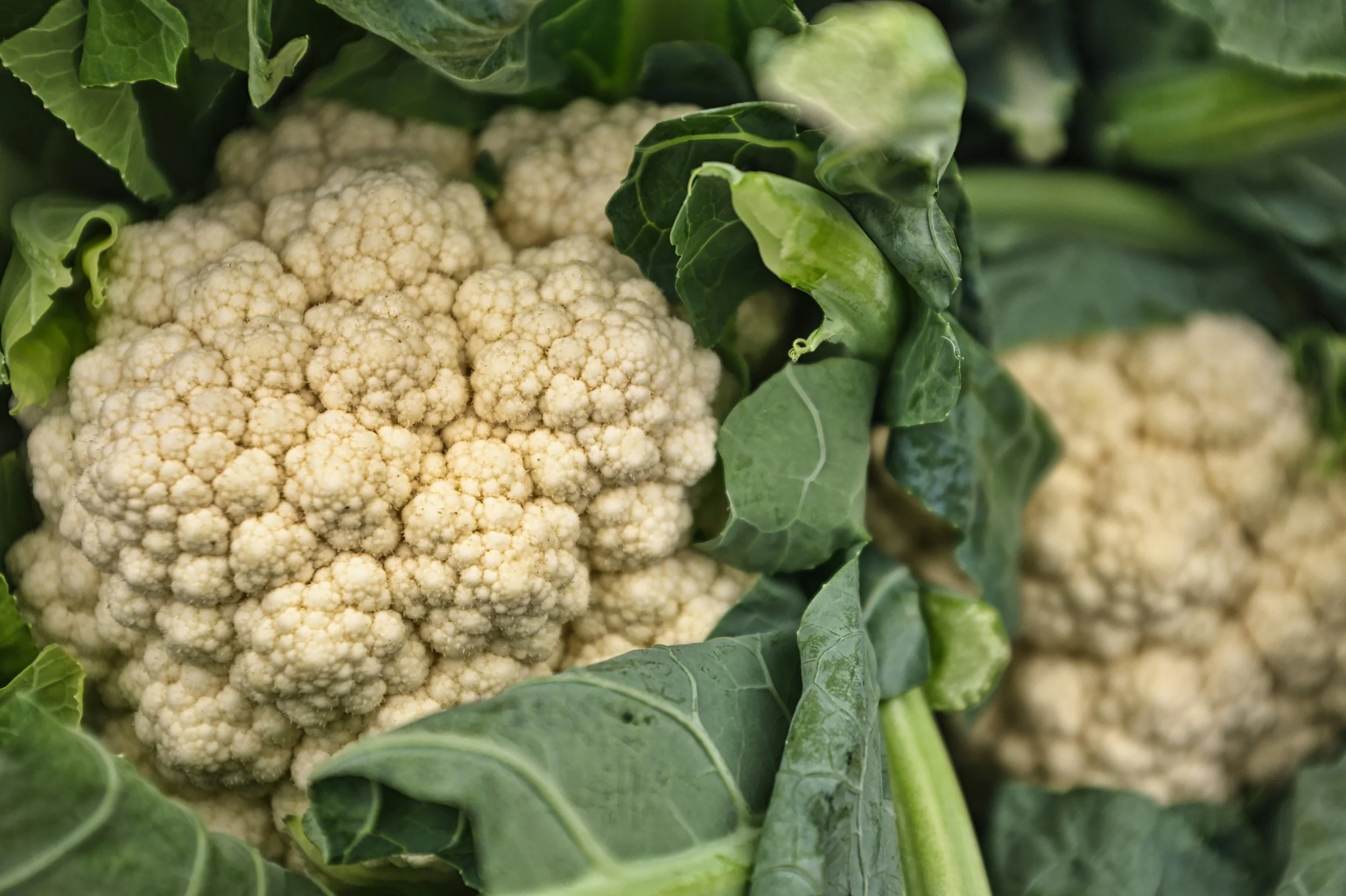
Let’s begin with January’s seasonal vegetable: cauliflower.
According to Britannica, cauliflower is a modified form of cabbage in the mustard family (Brassicaceae), grown for its edible clusters of partially developed flower buds and fleshy stalks.
Cauliflower is a nutrient-dense vegetable and an excellent source of:
Vitamin C, which supports immune function
Vitamin K, important for bone and cardiovascular health
Several B vitamins, including thiamin (B1), riboflavin (B2), niacin (B3), pantothenic acid (B5), vitamin B6, folate (B9), and cobalamin (B12)
Minerals such as potassium, calcium, and iron
Dietary fiber, essential for digestive health
During the cooler winter months, vitamin C and B vitamins play a key role in supporting immune resilience. Fiber is equally important, yet many individuals do not consume enough of it on a daily basis.
Research shows that dietary fibers - particularly prebiotic fibers - support gut health by nourishing beneficial bacteria. Adequate fiber intake has been associated with improved digestion, immune system support, reduced inflammation, cardiovascular health, mineral absorption, and satiety.
A Versatile, Nourishing Winter Vegetable
One of the things I love most about cauliflower is its versatility. It beautifully absorbs spices and flavors, making it easy to incorporate into a variety of meals. Whether roasted, blended into soups, or used as part of a main dish, cauliflower can be both comforting and deeply nourishing.
In my next post, I’ll be sharing a couple of simple, flavorful recipes that highlight how easy it can be to enjoy this seasonal winter vegetable.
For additional inspiration, seasonal vegetables and fruits ready to harvest in January in the Arizona low desert include: broccoli, cabbage, beets, carrots, grapefruit, lemons, and oranges.
Caring for the body God gave us begins with small, consistent choices. If you’d like support learning how to nourish your body through real, seasonal food, I’d love to walk alongside you. You’re welcome to book a free Discovery Call, and together we can explore what your body may be needing in this season.
Resources:
Encyclopaedia Britannica – Cauliflower: Nutrition & health benefits
Nutritional Therapy Association – Culinary Wellness Guide
USDA FoodData Central – Cauliflower, raw nutrition data
Nutrients Journal – Review on dietary fiber and health (2022)