The Key to Steady Energy: Balance Your Plate
When it comes to nutrition, there is a lot of noise out there. Counting calories, tracking macros, and debating the latest diet trends can feel overwhelming. The truth is, creating a balanced meal does not have to be complicated. At the foundation of every plate are the three macronutrients: protein, carbohydrates, and fats. These are the building blocks of our food and the fuel that keeps our bodies thriving.
Let’s break them down.
Protein: The Builder
Protein does far more than build muscle. It provides the raw materials your body needs to repair tissues, support organs and nerves, create enzymes, and carry out countless other functions. Without enough protein, the body struggles to keep up with the everyday work of healing and growth.
There are plant-based sources of protein, like quinoa and buckwheat, but high-quality protein from animal sources is often the most complete form. Think wild-caught fish, grass-fed beef, bison, lamb, or pasture-raised poultry. These provide the full range of amino acids your body needs for optimal health.
Carbohydrates*: The Quick Fuel
Carbohydrates are made of carbon, oxygen, and water molecules. That is where they get their name. This macronutrient includes vegetables, fruits, legumes, and grains.
Carbs are your body’s quick energy source. Imagine them as kindling in a fire. They burn fast, fueling your brain and muscles when you need it most. While whole food sources of carbs are nourishing, the body feels most balanced when carbs are paired with protein and healthy fats.
Fats: The Steady Fuel
For decades, fats were misunderstood and even feared. But the truth is, fats are essential. They support countless body functions: absorbing fat-soluble vitamins (A, D, E, and K), building hormones, supporting brain health, and help us feel satisfied after a meal.
Fats also give food flavor and provide long-lasting energy. Returning to the fire analogy, if carbs are the kindling, fats are the logs that burn slowly. They keep your energy steady throughout the day. Look for quality fats from sources like avocado, olive oil, coconut, grass-fed butter, nuts, and seeds.
How Much of Each Do You Need?
You might be wondering if there is a “perfect” ratio of protein, carbs, and fats. The truth is that every person is unique. Your macronutrient needs depend on factors like energy spend, body composition, age, and overall health.
Instead of focusing on percentages, pay attention to how your body feels after meals. Your plate should leave you energized and satisfied, not sluggish or hungry an hour later.
How to Know You’ve Found the Right Balance
Here are a few signs your meals are well-balanced for you:
You feel comfortably full after eating and stay satisfied for several hours. (If not, try adding more protein or healthy fat, like a larger piece of meat or a slice of avocado.)
Your energy remains consistent throughout the day without a mid-afternoon crash.
Your mood feels steady, you're thinking clearly, and your focus is sharp.
You sleep soundly at night and wake up feeling rested, without needing coffee the second your feet hit the floor.
Building balanced meals does not mean counting every gram or chasing perfection. It is about tuning into your body, learning how different foods make you feel, and adjusting until you find what truly works for you.
Remember, nutrition is not one size fits all.
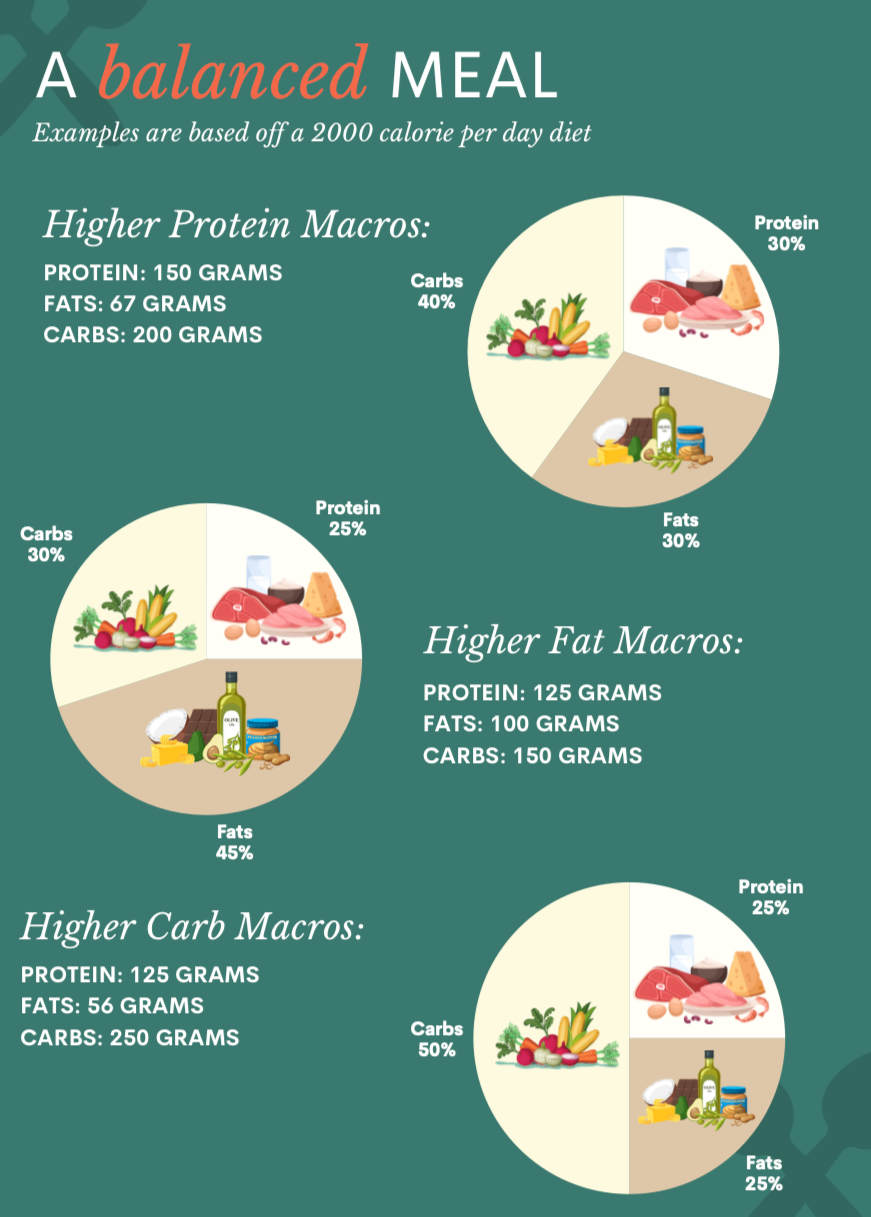
With a foundation of protein, carbs, and fats on every plate, you can begin to create meals that nourish your body, stabilize your energy, and support your long-term health. The chart above offers a simple visual of how different macronutrient balances, whether higher in protein, fat, or carbohydrates, might look in a day. Use it as a guide, not a rule, and adjust based on what helps you feel your best.
If this feels overwhelming and you would like support in finding what balance looks like for you, I would love to help. Book a free discovery call and let’s talk about your goals and how we can create a plan that feels right for your body and lifestyle.
*Holesh JE, Aslam S, Martin A. Physiology, Carbohydrates. [Updated 2023 May 12]. In: StatPearls [Internet]. Treasure Island (FL): StatPearls Publishing; 2025 Jan-. Available from: https://www.ncbi.nlm.nih.gov/books/NBK459280/